
Why Does an AI Humanizer Shorten My Text?
An AI humanizer may shorten text because it removes repetition, simplifies phrasing, or combines overlapping ideas. A rewrite can preserve the main message while using fewer words, but it can also lose details that matter.
The distinction is information preserved, not length alone. Understanding which edits caused the reduction makes it easier to retain both a natural writing style and the substance of the original.
Key Takeaways
Shorter output can result from cleaner wording rather than missing information.
Examples, qualifications, technical terms, and citations need protection during rewriting.
Length instructions, smaller sections, and side-by-side comparisons help keep revisions within the intended scope.
Why Humanizers Produce Shorter Rewrites
Humanizing changes more than individual words. It can alter sentence structure and remove language that repeats an earlier point. Our explanation of humanizers and paraphrasing tools examines these different editorial roles.
Repetition disappears during revision
AI-generated drafts sometimes explain an idea, restate it in different words, and then summarize it again. Introductions and conclusions are common places for this duplication.
A humanizer may combine those passages into one explanation. Repeated transitions and stock opening phrases can disappear too. The result is shorter because several sentences were doing the same job.
However, repetition can carry a purpose. A warning repeated beside a relevant instruction may help readers who skip directly to that section.
Simpler phrasing compresses ideas
Plain language often takes less space. A long introductory clause can become a short transition, while several related sentences can become one.
Compression also happens when a rewrite retains a broad point but drops its supporting explanation. That is a larger editorial change than replacing formal vocabulary with everyday language.
Without a clear preservation instruction, the requested scope can remain ambiguous. OpenAI's prompt engineering guide describes how explicit instructions guide generated output.
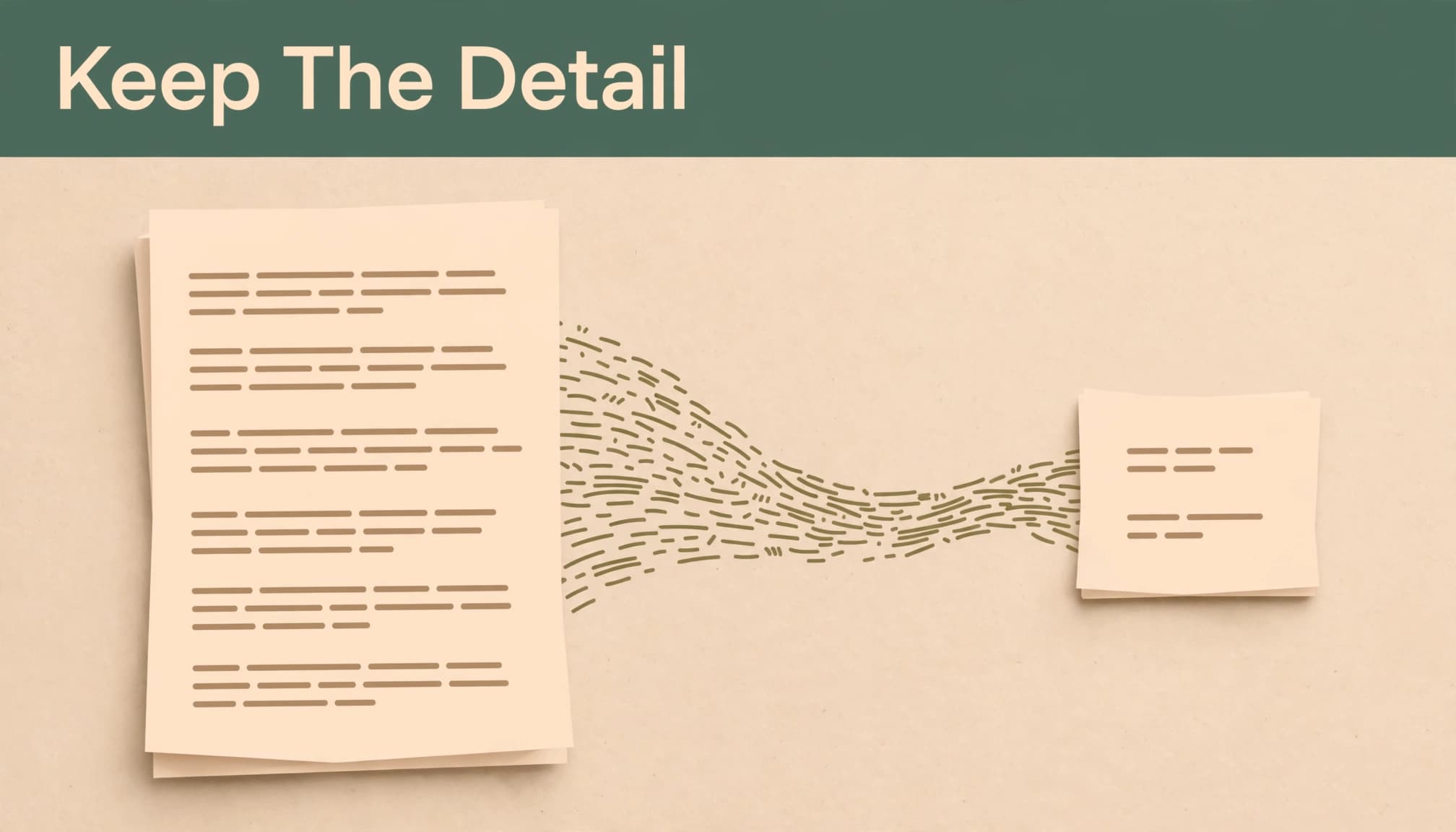
When Shortening Starts Removing Meaning
A shorter draft needs closer attention when it loses the evidence or conditions behind a claim. Removing a duplicated introduction differs from removing the example that explains an unfamiliar concept.
Protect qualifications and source connections
Words such as "may," "usually," and "under these conditions" define the limits of a statement. Removing them can make tentative findings sound certain or turn a conditional instruction into a universal rule.
Citations also need to stay connected to the claims they support. Rearranging a paragraph can separate a source from its evidence even when both remain somewhere in the document.
Legal, financial, academic, and technical passages need particular care because small wording changes can alter their meaning.
Compare content, not just totals
A word count shows the size of a reduction, but it doesn't identify what disappeared. The useful comparison follows the original argument paragraph by paragraph.
Microsoft Word's Compare feature or Google Docs' version history can help track revisions. Names, dates, quantities, and technical terms deserve attention alongside examples and exceptions.
A rewrite can retain every main heading while losing the conditions that make its claims accurate.
Our ChatGPT text humanizer focuses on more natural wording and flow while retaining the original message. Comparing the result with the source keeps that message visible throughout revision.
How to Preserve Length and Important Details
Length preservation works best as an explicit editing constraint. A general request for more natural prose leaves room for broader cuts.
Set the length and preservation instructions together
Where a tool accepts custom instructions, the request should distinguish rewriting from summarizing. It should also identify what must remain unchanged.
A useful instruction is:
"Rewrite for natural flow without summarizing. Keep approximately the original length and paragraph structure. Preserve names, dates, numbers, citations, technical terms, examples, and qualifications. Don't add facts or new examples."
OpenAI's prompt-writing best practices recommend being specific about the desired outcome, including length and format.
For work with a strict minimum, a target range makes the requirement clearer than "keep it detailed." An instruction still needs a final comparison; it doesn't establish that every requirement survived.
Process smaller, complete sections
Rewriting one self-contained section at a time makes omissions easier to spot. It also gives each passage a clear editorial purpose.
A definition should stay with its explanation. Evidence should stay with its citation. An instruction should stay with the conditions and warnings that govern it.
Splitting every sentence into a separate request can remove useful context, however. The better unit is a complete paragraph or short section.
If a passage becomes too brief, the next revision should restore the missing explanation directly. Reprocessing the entire document makes unrelated changes harder to track.
Frequently Asked Questions
Does shorter output mean the humanizer failed?
No. Removing redundant wording can improve a draft without losing substance. The problem starts when the rewrite removes necessary evidence, changes a qualification, or falls below a required minimum length.
Should a shortened draft be expanded automatically?
Expansion should restore information rather than add padding. Missing examples, reasoning, or source context belong back in the text. If nothing substantive disappeared, repeating the same point merely to recover the original total weakens the result. A firm length requirement calls for relevant, supported detail.
Preserve the Substance Behind the Length
An AI humanizer can shorten text through useful editing or through cuts that remove necessary detail. Preserving meaning requires attention to which kind of change occurred.
Clear constraints and section-level comparisons make that distinction easier to see. A shorter draft succeeds when its evidence, limits, and explanation remain intact.