A grammatically clean draft based on AI-generated text can still repeat the same sentence shape and bury useful details beneath generic language. An AI humanizer targets that stiffness, while the other approach focuses on expressing a passage differently.
The choice depends on what needs changing: voice across several paragraphs, wording within one sentence, or the underlying argument. Both tools can alter meaning or introduce errors, so every revision needs review.
The distinction starts with the editorial task, rather than the product label.
An AI humanizer aims to improve tone, rhythm, and flow, while paraphrasing software re-expresses existing text. Their features often overlap.
Neither tool verifies facts, preserves every qualification, or guarantees a reliable result from an AI detector.
The strongest workflow protects sources and technical language, retains earlier drafts, and checks every change against applicable academic or workplace policies.
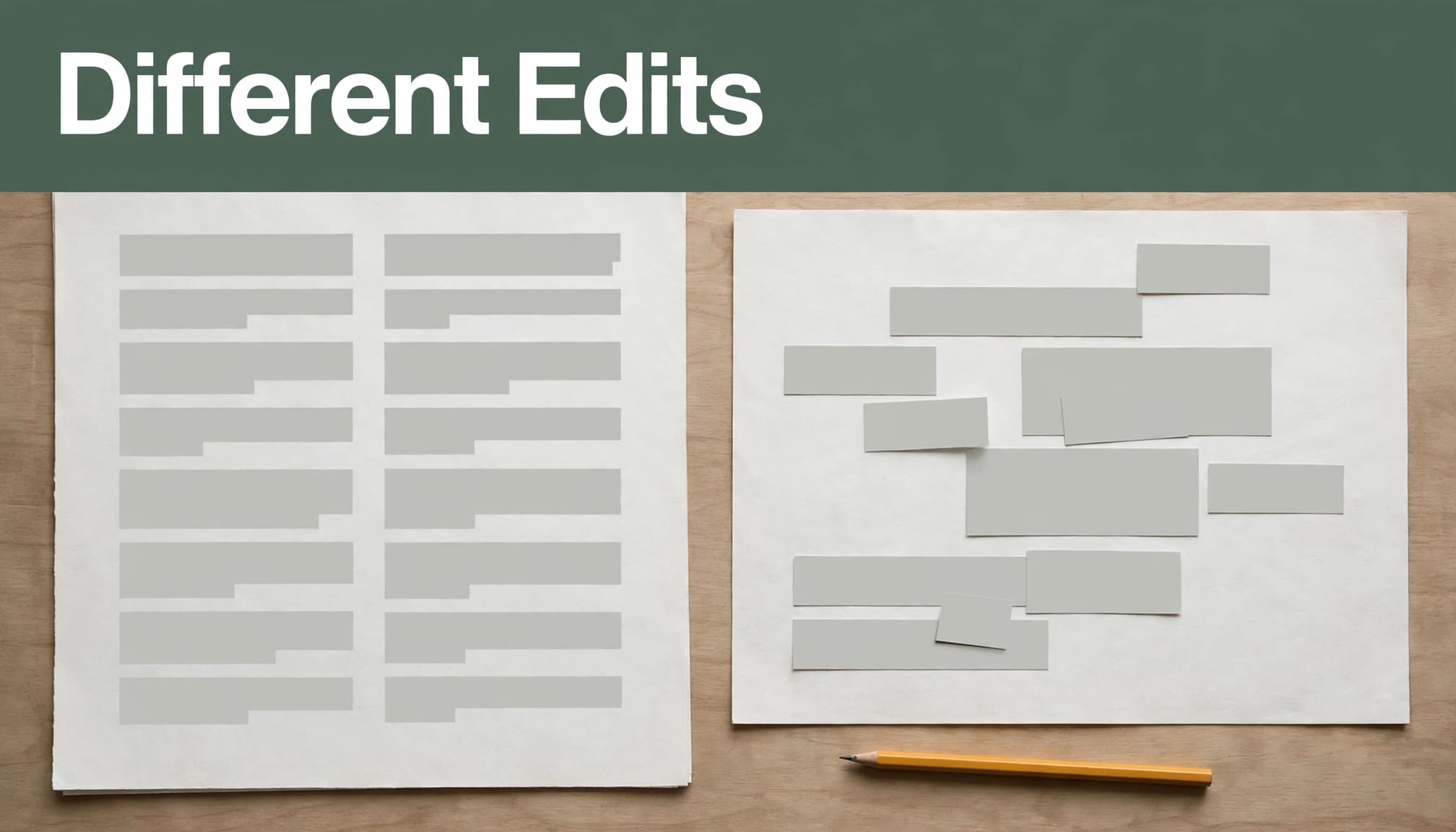
An AI humanizer rewrites text with the aim of making its tone and rhythm sound more natural. It may shorten repetitive introductions, vary sentence openings, or replace stock phrasing with plainer language.
That can help make AI-generated text from ChatGPT, Claude, or Google Gemini read more naturally. However, the tool's name doesn't establish the quality or scope of its editing.
A humanizer also can't supply an author's lived experience or decide which observation deserves emphasis. Smooth prose may still lack evidence, a clear position, or a reason to exist.
This tool restates existing material by changing vocabulary, sentence structure, or wording. Writers often use it to untangle a difficult sentence or explore a clearer formulation.
Modern paraphrasers can also adjust tone and rewrite whole paragraphs. Therefore, the categories overlap: one product may offer both functions.
Traditional rewriting can go further by changing the argument's order, removing sections, or rebuilding an explanation for another audience. Those decisions require editorial judgment. A product labeled "humanizer" doesn't necessarily make them better than a product labeled "paraphraser."
A humanizer is a reasonable candidate when several paragraphs share repetitive phrasing or stiff sentence structure. The task is passage-level revision, so isolated synonym changes may leave the problem intact.
Still, natural writing doesn't require slang, deliberate mistakes, or elaborate sentence variation. Technical documentation and formal reports often need consistent terminology more than conversational warmth.
Better initial instructions can also reduce revision work. A clear audience, approved source material, and a defined purpose give a drafting system useful boundaries. Generic requests leave more decisions to the model.
A paraphraser fits a smaller task: shortening a cumbersome sentence, reducing local repetitive phrasing, or testing another explanation. It allows the surrounding argument to remain largely untouched.
When a draft already has accurate facts and a distinctive voice, targeted grammar and clarity suggestions may be enough. Grammarly is a familiar option for that kind of editing, although its broader rewriting features need the same scrutiny. Content creators and SEO writers can use AI tools to humanize AI text for a revision goal, checking meaning and accuracy.
Neither approach repairs missing research. If the draft lacks a supported argument, additional reporting or manual restructuring comes first. Language revision belongs after the writer has something defensible to say.
An initial comparison should focus on how much control the writer retains.
Editorial need | AI humanizer | Paraphrasing tool |
|---|---|---|
Revise repetitive paragraph rhythm | Common target | Depends on rewrite scope |
Re-express one difficult sentence | Often possible | Common target |
Preserve approved wording exactly | Requires protection and review | Requires protection and review |
Verify facts and citations | Needs independent review | Needs independent review |
The practical difference is often the editing interface, not the label.
QuillBot is a well-known paraphrasing product; Grammarly combines writing assistance with revision features. AI Humanizer offers humanization alongside other writing checks. Calling a product an advanced humanizer doesn't prove quality or show which output fits a document.
Useful controls include adjustable rewrite strength, protected terminology, side-by-side comparison, and clear identification of changes. For multilingual work, performance in the actual language matters more than the number of supported languages.
Test a free AI humanizer alongside paid options. Payment doesn't establish accuracy, and a free tier doesn't establish suitability. Check current limits and privacy terms before entering confidential material.
A short sample can reveal whether a tool preserves qualifications and voice. Repeated manual repairs may cancel any apparent time saving.
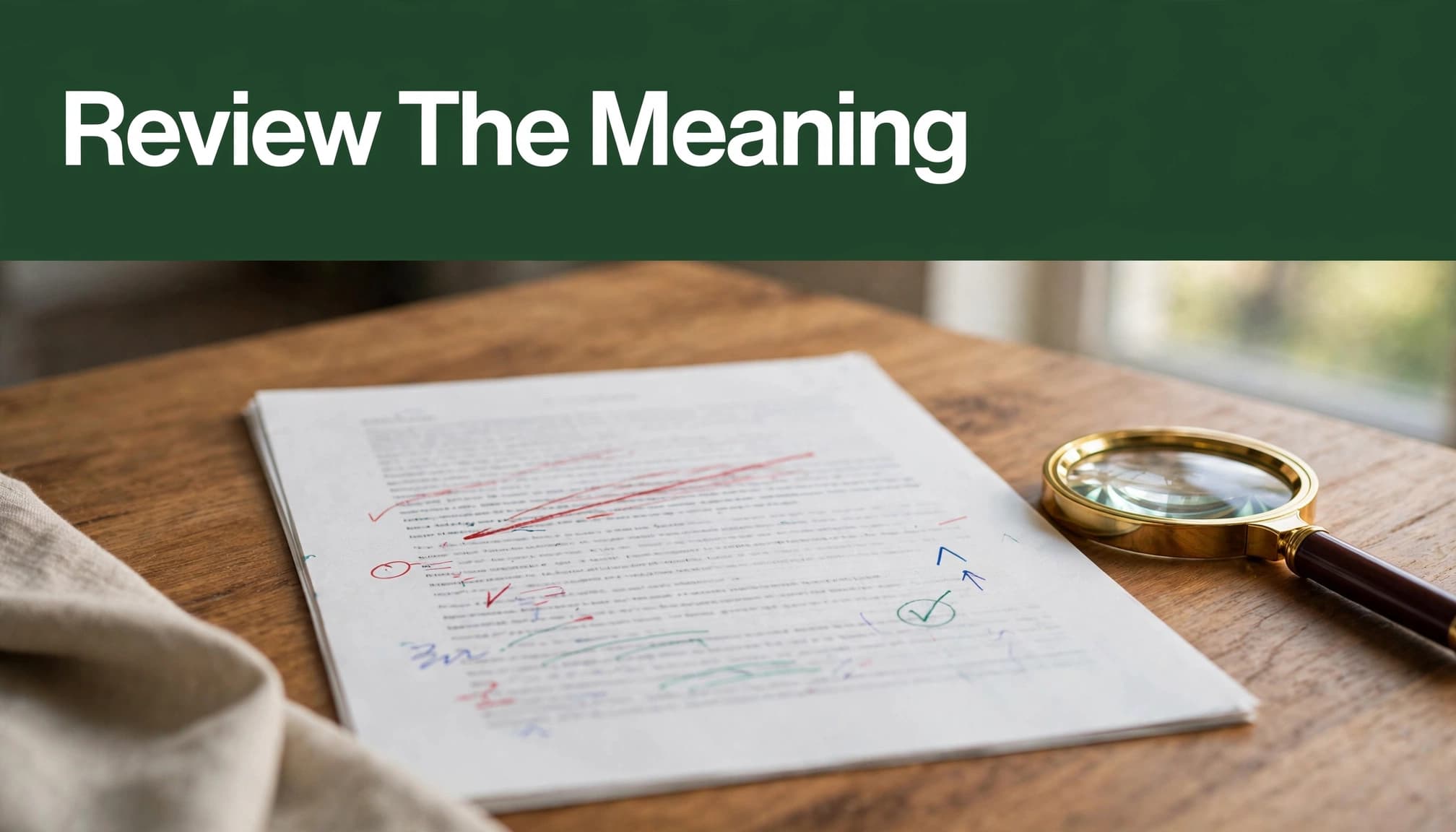
Humanizers and paraphrasers can change meaning even when the revised sentence sounds better. A removed qualification may turn a tentative finding into a firm conclusion. Reordered clauses can also change who acted or which condition applies.
Words such as "may," "must," and "only" carry substantive weight. Legal clauses, research findings, financial statements, and technical instructions need particular care.
Direct quotations should remain exact. Editors should also protect citations, dates, product names, measurements, and code. A citation that survives a rewrite may still sit beside a claim its source doesn't support.
A preserved citation doesn't prove that the rewritten claim still matches the cited evidence.
A controlled writing process gives each revision a defined boundary. Retain the original and review every change against its original meaning and source material, rather than accepting it automatically:
Establish the approved facts and identify passages that must remain unchanged.
Revise a limited section with a clear goal, such as reducing repetition.
Compare every change against the original and the underlying sources.
Save the reviewed version with any required disclosure and approval record.
This review should cover omissions as well as additions. A shorter paragraph may lose an exception, while a warmer sentence may introduce an unsupported promise.
For source-heavy articles, building an evidence packet keeps notes, quotations, and verified facts available during revision. Readability scores can't replace that comparison.
Claims that a rewriting tool can reliably evade AI detection go beyond what it can guarantee. Results can vary across detection services, and a favorable score doesn't establish who wrote a passage.
Turnitin acknowledges possible false positives in its AI writing detection documentation. Human-written text can therefore receive an incorrect flag.
Its AI Writing Report guidance also explains that results above 0% and below 20% receive no numerical score or highlights because of false-positive concerns. That limitation matters when percentages appear more conclusive than they are.
A detector report doesn't verify factual accuracy, proper attribution, or compliance with a course rule. A similarity checker addresses textual overlap, which is a separate question.
Repeatedly editing to chase AI detection scores can also damage the draft. It may flatten precise language or move claims away from their evidence. The appropriate review concerns the writing process and the submitted work, not a single automated result.
Automated revision can be permitted assistance or prohibited substitution. The distinction depends on the institution, assignment, employer, or client agreement.
A course may allow spelling correction but prohibit generative rewriting. Another may permit language assistance with disclosure. Rephrasing an AI-generated essay doesn't change how its argument originated.
Paraphrasing someone else's work also doesn't remove the obligation to cite it. Changed wording can still borrow an argument, and a citation alone doesn't make unacknowledged copying acceptable.
Version history can document the writing process by showing how revisions were made. The discussion of false positives for multilingual writers also addresses the value of retaining original and revised drafts. Those records support review, but they don't automatically authorize a prohibited workflow.
Workplace rules add confidentiality and approval requirements. Client material, unpublished research, employee information, and contractual language shouldn't enter an external rewriting service without authorization. Teams need to establish acceptable data handling and assign responsibility for final approval, regardless of how natural the result sounds.
Google's guidance on AI-generated content says appropriate use of AI or automation isn't inherently against its policies. That doesn't establish a ranking benefit for humanized text.
Clearer writing can make an article easier to follow. However, a humanizer can't create firsthand product testing, original reporting, or evidence missing from the draft.
Google's guidance on generative AI content addresses responsible website use, including the need to consider accuracy, quality, and relevance. Rewriting generic material at scale doesn't supply those qualities by itself.
SEO writers may use a tool to humanize AI text in marketing copy. They should judge revisions by usefulness, evidence, and accuracy, not labels or assumed ranking benefits from search engines.
Humanization earns its place when it improves an already supported explanation. Publishing polished claims without checking them can weaken reader trust, regardless of the production method.
No tool can reliably guarantee that outcome across detectors. Results can be unreliable, and a low score doesn't prove authorship or policy compliance.
Different wording doesn't automatically create an original contribution. Borrowed ideas still require attribution, and substantive AI assistance may require disclosure.
Free tools can help with revision, but their output needs the same review as paid software. Neither price nor fluency establishes accuracy. Source-sensitive material should receive a final human check.
Yes, where policy permits it. However, each additional rewriting pass creates more changes to verify. A second tool is useful only when it addresses a remaining problem.
Choosing an AI humanizer or a targeted rewrite depends on the scope of the revision. Passage-level stiffness may call for broader changes, while one awkward sentence may need a limited rewrite.
The stronger result preserves meaning, evidence, and ownership. Natural prose comes from accountable decisions throughout the writing process. Software can propose different words; the writer remains responsible for what those words claim.
