Turnitin has become a stand-in for a larger campus fear, specifically that one machine can write a paper and another can expose it. Much of the confusion surrounding turnitin ai detection starts with the habit of using the word flagged for several different reports that perform very different jobs.
Turnitin does not read motive, and it does not decide guilt. It produces signals, some about text overlap and some about likely machine-generated content, then leaves the hard judgment to instructors and institutions. That distinction becomes increasingly vital as more students incorporate AI writing tools into their academic workflow.
Turnitin is a diagnostic tool, not a judge:
The software provides probability signals regarding text similarity and machine-generated patterns, but it cannot determine motive, intent, or academic misconduct on its own.
Distinction between signals:
Turnitin separates similarity reports (which check against existing databases) from AI detection reports (which analyze prose patterns), and these two metrics serve entirely different purposes.
Focus on authorship:
The system flags content that displays patterns typical of large language models, including text that has been heavily rewritten or paraphrased by AI, regardless of whether a human performed the final edits.
Policy defines the outcome:
Because institutional and instructor rules vary widely, the same AI-detection percentage may be viewed as an acceptable use of a tool in one class and a violation of academic integrity in another.
The first signal is similarity checking. It compares a submission against web pages, books, journals, and past student submissions, then highlights overlapping text. That report can look severe even when the writing is fine. Quotations, references, assignment instructions, and common phrases can all raise the score.
A similarity score is not the same thing as plagiarism. Plagiarism is a human judgment about whether someone passed off another person's work or ideas without proper credit, which remains a core concern for academic integrity. A paper can have a high similarity score and still be acceptable. A paper can also have a low score and still contain plagiarism through close paraphrase or poor citation.
That is why "Turnitin flagged the paper" often tells almost nothing on its own. It may mean the software found source matches. It may mean an instructor saw a citation problem. Or it may refer to the separate AI writing detector.
In Turnitin's guide to the AI Writing Report, the company says the feature is meant to help educators identify text that may have been produced by a generative AI tool. A separate John Cabot University FAQ explains that the report can show an overall percentage of AI-generated text the system predicts may be present. That percentage does not measure plagiarism, and it does not restate the similarity score in another form.
The distinction matters because each report answers a different question. Similarity asks where text overlaps with known material. An AI indicator asks whether the language pattern resembles machine-written or machine-rewritten prose. Neither one can settle authorship or misconduct on its own.
Turnitin's approach to detecting AI writing focuses on analyzing language patterns rather than matching text against a database of known sources. In simple terms, the system is designed to flag prose that appears to have been generated by a large language model, as well as content that has been heavily rewritten by an AI tool.
That second category often surprises people. The system is not limited to full chatbot drafts. It may also mark text that began as human writing and then passed through an AI paraphraser. A student might think the real issue is resolved once the wording changes. From the perspective of the software, the rewritten passage can still carry clear evidence of machine-shaped language.
Turnitin's own materials frame this as a method of identifying specific writing patterns across sections of a document. The model does not act like a search engine that catches one suspicious sentence and declares the case closed. It looks across broad stretches of prose and estimates whether those passages fit traits typically associated with generative AI output.
The AI detection score is a probability signal, not a finding of misconduct.
That distinction is vital because percentages often appear more certain than they actually are. A number on a report can feel final, yet it still rests on statistical prediction. Within the assessment process, the AI-writing report is delivered to instructors rather than students. Under the current setup, students usually cannot see the score themselves, while instructors use the report to review sentence-level highlights and the overall composition of student essays.
The result is less like a courtroom ruling and more like a prompt for professional scrutiny. A flagged section indicates that the model detects machine-like writing patterns within the text. It does not provide a definitive explanation for why those patterns appear, whether the specific course banned that kind of assistance, or whether the writer used AI in a way the institution permits.
Turnitin cannot tell whether a writer used AI writing tools for brainstorming, grammar support, translation help, note-taking, or full drafting. Those uses can carry very different policy outcomes, but the software does not know the assignment rules or the course syllabus. It reads the final text rather than the full history of your academic drafts.
It also cannot determine intent. A student may have broken a rule by pasting an AI draft into a paper. Another may have used a chatbot in a way a professor allowed. A third may have written the essay alone but revised it into stiff, formulaic prose. The report cannot sort those stories by itself.
That limit matters because the same percentage can mean different things in different settings. A flagged passage in a take-home exam may raise a serious problem if all outside assistance was banned. The same passage in a drafting workshop may lead only to a question about disclosure or revision process. Policy, context, and evidence still carry the real weight.
The software also does not verify truth. A paper can avoid an AI flag and still contain made-up quotations or false citations. It can also receive an AI signal even when the underlying facts, sources, and argument came from the student. Guidance regarding academic integrity, such as the University of Melbourne's advice on Turnitin and AI writing detection, treats the report as one piece of evidence rather than a stand-alone verdict for detecting AI writing.
The sharpest line in AI-assisted writing is not between any use and no use. The line is between support and substitution. Many institutions now allow some forms of assistance, such as planning help or limited language editing, while banning undeclared AI drafting or rewriting. Because academic writing standards vary, the same action can move from acceptable to prohibited when a course rule changes.
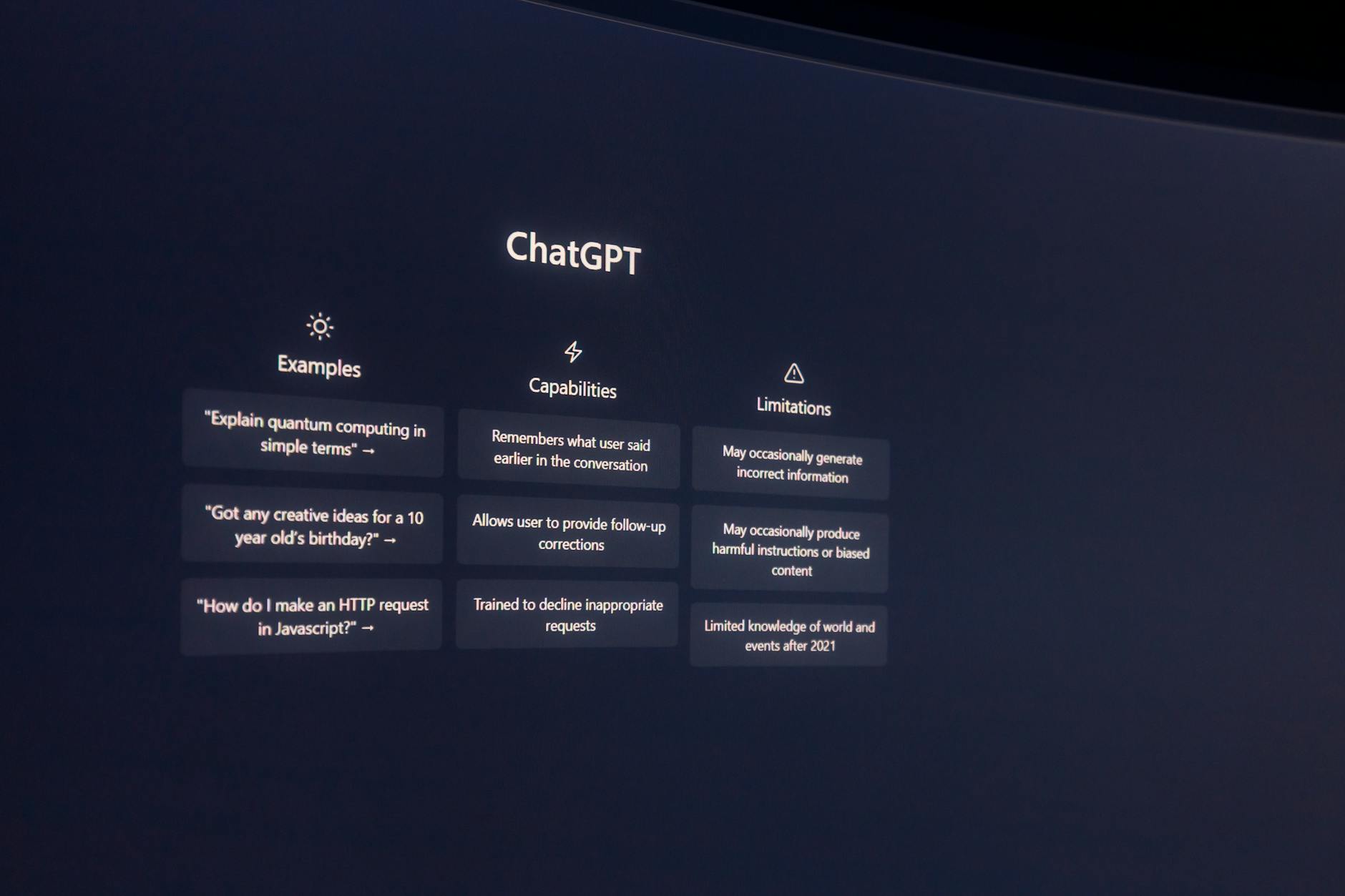
Photo by Matheus Bertelli
These examples using ChatGPT show how the distinction often works when schools allow limited support but ban AI authorship.
Workflow | Likely interpretation | Why it raises, or lowers, concern |
|---|---|---|
Using ChatGPT to suggest research questions for research papers, then doing source work and drafting by hand | Often allowed, if policy permits it | The tool helps with planning, but the writer still builds the paper |
Asking AI to fix grammar on a self-written draft, then reviewing each change | Often allowed in language-support settings | Human authorship remains clear, though disclosure may still be required |
Asking AI to explain a concept, then writing from the original sources | Mixed, but often acceptable | It can function like tutoring, unless the AI answer becomes a hidden source |
Running a source paragraph through an AI paraphraser and pasting the result into the paper | Often prohibited | The wording changes, but the authorship and citation problem remains |
Generating full paragraphs with AI and revising a few lines before submission | High risk | The core prose may still look machine-written and can trigger the AI indicator |
Using AI to invent citations or quotations | Prohibited and risky | The problem is fabrication, even if Turnitin misses the AI origin |
The pattern is plain. Once AI starts supplying sentences that remain in the final draft, the paper moves toward authorship trouble. Heavy rewriting can create the same issue. A student may believe the final prose is now their own because it no longer matches the first AI output, but when systems are tasked with detecting AI writing, they may still identify the machine-generated patterns. If the machine did the drafting or the substantive rephrasing, many institutions will still treat that as disallowed assistance.
Disclosure also matters. Some instructors permit limited AI use if students say what tool they used and how they used it. Others ban the same workflow outright. That is why abstract debates about using AI responsibly often miss the point. The real standard is local policy, applied to an actual writing process.
Turnitin does not read institutional rules. It cannot know whether a department allows AI for translation support, which is particularly important for English Language Learners and other non-native English speakers who may trigger a higher false positive rate when utilizing assistive tools. It also cannot determine whether a professor required original drafting without tools, or whether a writing center approved limited editing help. Those choices belong to schools and instructors, and they shape how the report is read.
As a result, two educators can look at the same AI essay checker output and reach different conclusions. One may treat it as a cue to compare the final paper with earlier drafts, notes, and citations. Another may place little weight on the score and focus on oral follow-up with the student. In a timed assessment, the same report may carry more force because outside help was barred from the start.
This is where many disputes begin. Students often hear that Turnitin flagged their work and assume the software made a final determination. Educators sometimes face the opposite pressure, a demand to treat the percentage as proof because it looks objective. Both reactions flatten a more ordinary reality. The software offers one form of pattern evidence, and institutions still have to interpret it.
That is also why record-keeping matters in contested cases. Keeping track of academic drafts, version history, research notes, and source annotations can show how a paper took shape. These documents do not override policy, but they can give a fuller account than an AI detection score on a screen. Turnitin's AI detection can raise a question, but it cannot answer the whole case because it cannot see the writer's process, the course rules, or the intent behind the text.
No, an AI detection score is not a finding of plagiarism or academic dishonesty. It is simply a statistical prediction that the text contains language patterns commonly found in AI-generated content, which requires human review to determine if any rules were actually broken.
Turnitin cannot provide definitive proof of AI usage because it does not have access to your writing history, draft versions, or the specific context of your assignment. The software identifies language traits, but it cannot distinguish between a student who used AI to cheat and one who simply writes in a style that happens to mirror machine-generated prose.
Whether your use of AI is permitted depends entirely on your specific course syllabus and institutional policies. While some instructors allow tools for brainstorming or language support, others may prohibit them entirely; it is essential to disclose your process and verify what is allowed before submitting your work.
Generally, students do not have direct access to view their own AI writing report within the Turnitin interface. These reports are typically delivered directly to instructors to assist them in the grading process and to help them identify student papers that might warrant further discussion or review.
The sharpest misunderstanding about Turnitin AI detection is the idea that a flagged percentage settles authorship. It does not. The platform separates source matching from AI prediction, and both results still depend on human judgment.
What the system flags in assisted writing is prose that appears machine-generated or machine-rewritten. Whether those patterns amount to misconduct depends on the assignment, the draft history, and the institution's rules. While the report can point to a potential issue, it cannot define an offense on its own. It is essential to distinguish between AI-generated text and authentic human-written content before making any final decisions. Ultimately, the software is a tool meant to help educators detect AI content rather than a definitive judge of academic integrity.