Most drafts produced by ChatGPT content tools break in the same place. The facts may be accurate, but the voice often feels scrubbed clean, as if the output lacks any personal preference, memory, or mood.
That inherent flatness explains why so many professionals look for ways to humanize ChatGPT writing after generating their first draft. Quick fix prompts circulate widely online, ranging from a popular Reddit thread on human prompts to various blog posts built around a single clever instruction. Even so, the strongest results come from consistent revision rather than relying on a magic phrase.
The work starts with knowing what makes AI prose feel synthetic.
Go beyond word choice:
Human-like writing is not just about swapping synonyms; it requires shifting the rhythm, structure, and judgment within a piece.
Use specific, restrictive prompts:
To get better raw material, provide ChatGPT with a clear persona, defined constraints, and concrete source data rather than asking it to be "human" in the abstract.
Prioritize subtraction in editing:
AI drafts are often cluttered with filler, repetitive transitions, and abstract fluff. Cutting these elements is the fastest way to make a draft feel more authentic.
Anchor writing in lived experience:
The most effective way to humanize text is to insert unique details, specific examples, or personal observations that the AI cannot invent on its own.
Read drafts aloud:
Using your ears to catch awkward phrasing, robotic cadences, and bloated sentences is the most reliable way to ensure your content sounds like it was written by a person.
ChatGPT predicts likely words. Because of that, it tends to produce language that feels safe, balanced, and average. The draft usually lands in the middle of the road, where nobody objects, but nobody hears a person either.
That shows up in familiar ways. Openings sound generic. Sentences arrive in the same neat length, often trapped in repetitive robotic phrasing that fails to capture human cadence. Abstract nouns crowd out concrete ones. The copy explains every point twice, then adds one polite closing line for good measure.
A human writer rarely sounds that even. People speed up, slow down, skip a bridge sentence, or linger on one odd detail because it matters to them. Real prose has seams. It reveals taste, impatience, emphasis, and the occasional sharp edge.
Many attempts to fix the problem stay too shallow. A few synonyms get swapped. One stiff phrase turns casual. The paragraph still feels machine-made because the structure has not changed. The issue sits in rhythm, focus, and judgment, not only in word choice.
That is why rewriting tools have limits. The rise of products such as Grammarly's AI Humanizer shows how common the problem is. Yet, even a quality AI humanizer can only smooth patterns it recognizes, often struggling to replicate the specific flow and readability that defines a unique authorial voice. It cannot decide which detail deserves attention or which sentence should stop early because the reader already understands the point.
The aim is readable, owned prose. Generating humanized text is crucial for search engine optimization and long-term reader trust. It ensures that a draft sounds like someone chose the words for a reason, not like a system averaged them from a million similar pages.
Revision does most of the heavy lifting. Even so, a better first draft saves time. ChatGPT tends to sound less robotic when the prompt gives it a clear speaker, a real audience, and some material that was not pulled from generic training patterns.
A weak prompt leaves too much open. Asking for a LinkedIn post about remote work invites empty filler. The model reaches for the generic ChatGPT content it has seen countless times, such as "in today's workplace" or "communication is key." Those lines are not wrong, but they are lifeless.
A stronger prompt narrows the frame. You can use custom instructions to define a specific persona, such as a creative director, and dictate the structure by discussing how asynchronous updates cut weekly meetings. When you require the model to admit one trade-off and keep the tone plain, it has constraints and can make better choices.
Prompt templates can help. A widely shared humanizing prompt example from Sabrina Ramonov pushes the model toward natural language. By applying these specific techniques, you move closer to authentic writing that avoids the usual AI patterns. Still, prompts cannot create lived experience. If the source material has no sharp details, the output will sound borrowed.
A practical prompt usually includes four things:
A clear speaker, such as a student, founder, editor, or analyst.
A real task, such as drafting a memo, article section, or email reply.
Concrete source material, including facts, examples, quotes, or notes.
Limits on tone, such as plain language, short paragraphs, and no hype.
This also helps avoid the common mistake of asking for "human" in the abstract. That word is too vague. Better instructions ask for things a writer can spot on the page: fewer cliches, more concrete nouns, one skeptical note, shorter sentences, or a stronger point of view.
A good prompt gets closer to high-quality prose because it asks for specific choices. The final polish still comes later.
The human pass starts where most AI drafts fall apart, at the sentence level.
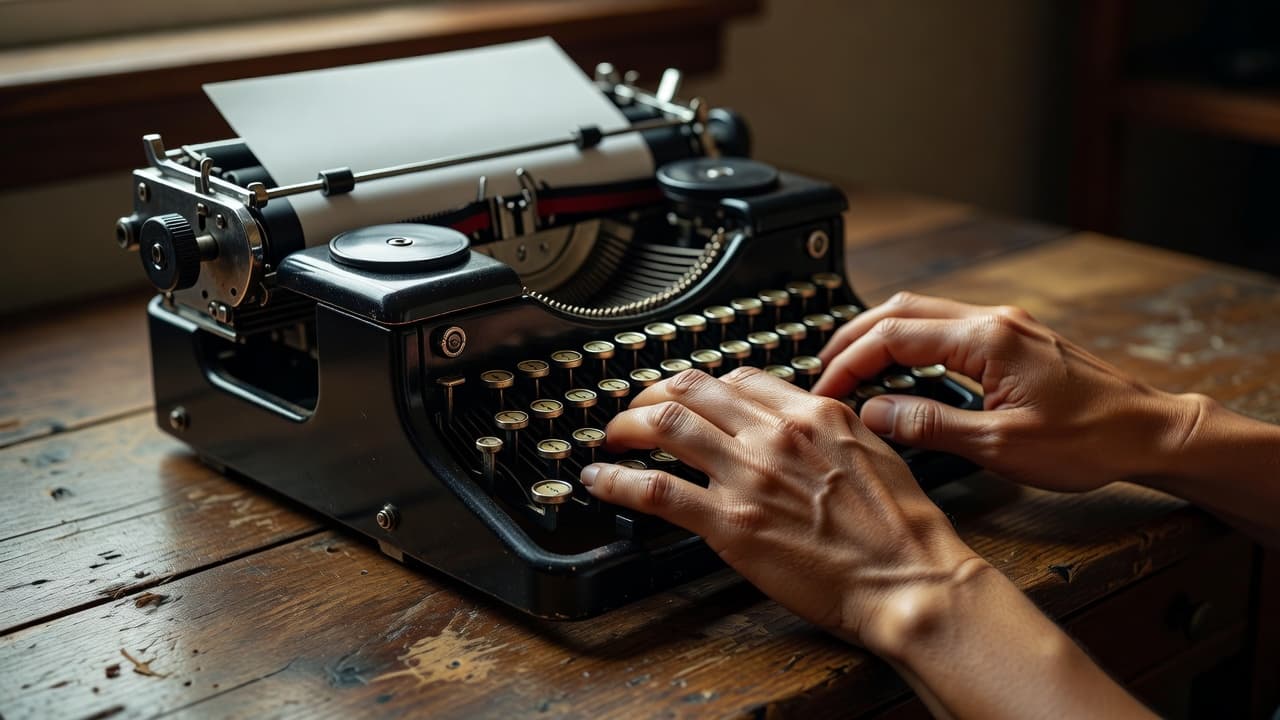
The first cut is usually subtraction. ChatGPT loves throat-clearing lines, padded transitions, and repeated claims. It also favors broad, polished statements that never commit to one concrete image.
A useful edit pass checks for a few repeat offenders:
Generic openings, especially ones that could start any article, email, or post.
Buzzwords, which often fill space without providing actual substance.
Abstract wording, where "efficiency" or "innovation" hides what actually happened.
Repetition, when two sentences make the same point with different phrasing.
Flat rhythm, where every sentence lands at the same pace and weight.
Human prose leaves signs of choice. It names one fact, favors one angle, and stops before the point turns mushy.
Specificity does more than make copy vivid. It creates credibility. "The team improved communication" says little. "The team replaced three weekly meetings with a shared Friday memo" sounds like something that happened in the real world.
Rhythm matters too. Many AI drafts march at one speed. A human editor breaks that pattern by using punctuation like commas or semicolons, or even choosing to vary sentence length, to reset the pace of a paragraph. A longer line can carry more texture, then give way to a punchy, short sentence. The page starts to breathe.
The shift becomes clear in side-by-side edits.
Robotic draft | Human revision |
|---|---|
"In today's fast-paced business environment, effective communication is essential for success." | "Clear emails save teams from long threads and repeated meetings." |
"The product offers a variety of features designed to improve productivity and enhance collaboration." | "The app cuts two daily chores, scheduling and follow-up." |
"This article will explore several important strategies that can help writers improve their content." | "Most drafts fail for one reason: nobody sounds present in them." |
The better lines aren't fancy. They are shorter, sharper, and more selective. They trade inflated framing for a clear image or claim. They also sound as if a person has weighed what matters and left the rest out.
To truly remove AI tells, you must focus on these personal adjustments to pass AI detection tests from tools like GPTZero, ZeroGPT, and Undetectable AI. While an AI humanizer can help smooth over some awkward phrasing, manual proofreading remains the only way to ensure your ChatGPT content feels truly authentic. The real lift comes from a person who knows what the draft is trying to say, what it should cut, and where it should sound more direct.
The strongest way to make ChatGPT writing feel human is to add what the model lacks: a personal voice anchored in judgment. That does not mean adding fake stories or staged slang. It means letting the draft carry a trace of genuine experience.
For a marketer, that may be one customer complaint that changed the copy. For a student, it may be a sentence that says where a source falls short, which helps maintain academic integrity and ensures the work will easily pass a plagiarism checker. For a freelancer, it may be a plain admission that a deadline slipped because the brief changed twice. Those details are small, but they shift the writing from generic to owned.
Writers often overcorrect here. They stuff drafts with casual phrases, contractions, and forced personality. The result can sound like a chatbot trying to imitate looseness. Real voice is usually quieter than that. It shows up in what the writer notices, what gets cut, and how much certainty the sentence carries.
Reading aloud helps because the ear catches what the eye excuses. This strategy is essential for achieving a conversational tone and making the prose feel more natural sounding. Stiff transitions stand out, as do doubled phrases, bloated clauses, and endings that explain too much. When you focus on these refinements, you significantly improve the flow and readability of the piece. If a line feels like something nobody would say, it usually needs a rewrite.
A final pass should also keep some texture. Perfect symmetry can feel suspect. A slightly uneven paragraph, a blunt sentence after a longer one, or one well-placed concrete detail can do more than a page of synonym swaps.
The goal is better prose, not a performance of humanness. That distinction matters.
While AI humanizing tools can help polish robotic phrasing, they are limited by their inability to understand your intent or unique perspective. They often focus on patterns rather than substance, making manual editing essential for high-quality, authentic results.
No, over-correcting with forced personality or slang often makes a piece sound like a chatbot imitating a person. Authentic human writing comes from specific choices, clear points of view, and the inclusion of genuine details rather than superficial style changes.
Search engines and readers prioritize content that feels authoritative and distinct. By humanizing your writing, you avoid the generic, repetitive patterns associated with AI-generated content, leading to higher trust and better engagement metrics.
Many people use these tools to ensure their work feels original, but they should be viewed as a guide rather than a final authority. The most effective way to pass these checks and provide value is to focus on rewriting the draft to include your own expertise and concrete, real-world examples.
ChatGPT writing becomes truly effective when a writer leaves fingerprints on the draft. Those marks are usually simple: a clearer point of view, a concrete detail, a less even rhythm, and the discipline to cut what sounds borrowed.
When it comes to modern content creation, effective prompts help by giving the model real constraints. However, the revision process is what finishes the job, as a personal voice lives in choice rather than decoration. By applying these edits, you can transform standard AI output into humanized text that feels authentic and engaging.
The drafts that hold up are the ones that sound owned. They do not pretend to be spontaneous; instead, they serve as natural sounding examples of what happens when a writer cares enough to decide exactly what belongs on the page. Achieving this quality in ChatGPT content requires active human intervention, ensuring the final piece reflects a distinct perspective that AI cannot replicate on its own.