Modern AI detection tools promise certainty, yet none can truly deliver it. By 2026, content teams use each AI detector less as a lie detector and more as a risk screen for freelance drafts, SEO pages, and brand publishing workflows.
The hard part is not finding a platform. The core challenge of detecting AI is deciding which error hurts more, a missed AI draft or a false accusation against a human writer. That trade-off shapes every serious buying decision in this category.
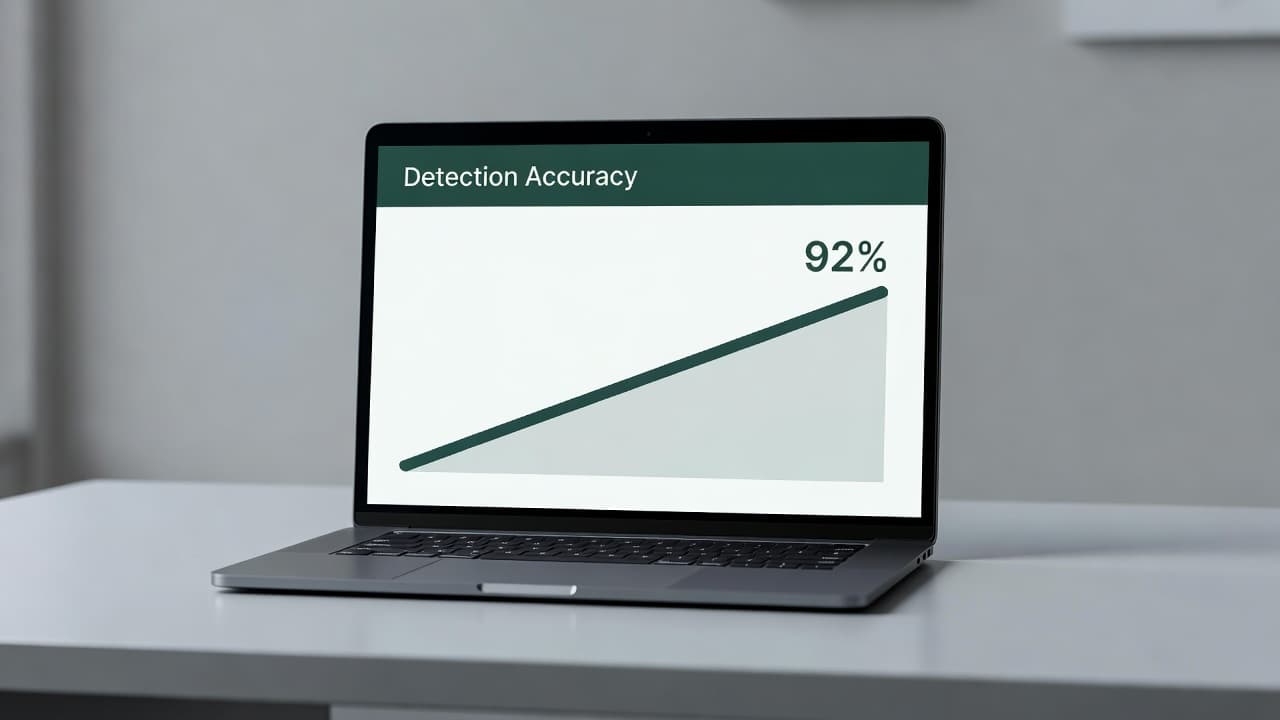
Independent testing reveals that most leading AI detector tools maintain an accuracy rate between 80 and 92 percent, which falls significantly short of the 99 percent claims often found in vendor marketing materials.
Originality.ai remains the most stringent option for publishers and SEO teams, whereas Copyleaks offers greater versatility for multilingual and enterprise-heavy workflows.
GPTZero stands out for producing fewer false positives and serves as a reliable choice for lighter triage, though it may lack the comprehensive operational features required by large content teams.
Winston AI is the premier specialist choice when your scanning requirements involve processing PDFs, screenshots, or other complex document images.
Detector scores should function primarily as a review signal rather than a final verdict, working best when paired with human-led draft reviews, edit history analysis, source verification, and sound editorial judgment.
The market still runs on inflated claims. In public benchmarks and independent comparisons from 2025 and 2026, real-world performance usually lands between 80 and 92 percent. That gap matters because content operations rarely review human-written text. They review edited drafts, partially rewritten passages, translated copy, and mixed AI-generated content.
False positives remain the central risk. Originality.ai, often the strictest scanner in the group, catches more suspect material, but independent reporting places its false positive rate between 2 and 5.7 percent. GPTZero appears gentler on human-written text, with a reported false positive rate around 0.24 percent in one 2026 comparison. Copyleaks sits between those poles. Meanwhile, detection accuracy drops when text has been revised heavily, and mixed-content checks often slide into the 70 to 80 percent range. Whether the source material originated from ChatGPT, Claude, or Gemini, these platforms struggle to maintain consistent detection rates across diverse datasets.
Detector scores are evidence to review, not proof of authorship.
Pangram Labs makes the same argument in its guide to detecting AI in legal documents, where an automated AI checker is treated as one part of a larger review process. Microsoft makes a related point in its overview of AI detector and humanizer tools: editing tone, flow, and word choice can change the signals that detectors rely on.
That makes 2026 a year for skepticism, not faith. A detector that looks brilliant on untouched chatbot copy may wobble when faced with polished editorial work. For agencies and in-house teams alike, the better question isn't "Which tool is perfect?" It is "Which tool fails in the least damaging way for this workflow?"
The table below provides a side by side look at how each leading AI detector performs based on the metrics that editorial teams care about most.
Tool | Independent accuracy | False positive signal | Best fit | Pricing signal | Main caution |
|---|---|---|---|---|---|
Originality.ai | 85 to 92% | 2 to 5.7% | Publishers, SEO, high-volume blog review; includes an integrated plagiarism checker | About $0.75 per 10k words, Pro plan around $14.95 for 200k words | Strictness can catch human writing |
Copyleaks | 74 to 94% | About 5% | Enterprise teams, multilingual programs | About $1.40 per 10k words | Performance varies by language |
GPTZero | 80 to 91% | About 0.24% | Editorial triage, lower-cost screening | Tiered plans, small free tier | Less of a full operations stack |
Winston AI | About 80% | Reported low | OCR-heavy workflows, PDF and image review | Public comparisons don't give a clean per-word benchmark | Narrower use case |
Pangram Labs | Strong benchmark results | Not clearly standardized in public comparisons | Second-opinion testing, benchmark-focused teams | Verify current pricing directly | Workflow depth needs verification |
Turnitin | About 58 to 68% on GPT-4 tests cited in 2026 comparisons | Not consistently disclosed | Higher education institutions | Institutional licensing | Focused on academic integrity; rarely the best fit for marketing teams |
No single row wins every column. High sensitivity tools catch more suspect copy, yet they also raise more internal friction because editors must clear more false alarms. Low false positive tools feel safer for writer relations, but they can miss more heavily edited AI output.
For a broader market snapshot, G2's AI content detector category is useful, especially for product discovery and buyer sentiment. Still, directory pages and user reviews rarely capture the operational cost of borderline flags, multilingual variance, or mixed content failure.
Originality.ai is still the default shortlist item for publisher-style review. Its appeal is simple: it is strict, it pairs AI detection with plagiarism checks, and it suits teams that review large amounts of blog content. That makes it attractive for SEO operations and agencies handling many freelance submissions. The trade-off is clear, though. A stricter tool creates more follow-up work, and its false positive rate is high enough to matter in real editorial settings.
Copyleaks is the practical enterprise alternative. Public 2026 comparisons keep returning to the same strengths: multilingual support across more than 30 languages, API access, and enterprise-friendly controls. Those details matter when detection has to sit inside a workflow rather than on the edge of it. For global brands and agencies with non-English output, Copyleaks often makes more sense than a publisher-first product. Its weak point is consistency, because accuracy varies more across languages and false positives are not trivial.
GPTZero works best as a triage layer. It is cheaper to try, easier to explain to non-technical editors, and stronger on false positives than the stricter competitors. Public comparisons also credit it with better adaptation to newer LLMs, such as GPT-5, Gemini 2.5, and Claude Sonnet. By analyzing the complexity of the sentence structure, the tool provides clearer insights into how text flows. Even when editors use tools like QuillBot to modify phrasing, GPTZero remains capable of evaluating the underlying patterns. That said, it still feels most convincing when a team wants review support, not hard gating. Sentence-level explanation helps reporting, yet it does not turn the product into a final authority.
Winston AI fills a narrower but real gap. Many editorial systems still receive screenshots, scanned PDFs, and image-based documents. Winston's OCR-oriented workflow and color-coded highlighting make it better suited to that job than tools built around pasted text. Teams that live inside standard CMS drafts may find it too specialized. However, it remains a robust choice for those who need to identify generated text within complex document types. Teams that audit client submissions or compliance-heavy attachments may find it indispensable.
Pangram Labs is the name to watch, largely because benchmark discussions in 2026 place it near the top for its ability to identify generated text regardless of the source. Still, benchmarks are not the same as day-to-day operations. Content teams would need to verify integration options, reporting depth, and pricing against their own process. Turnitin, by contrast, remains important in education but is rarely the cleanest buying path for marketing or publishing teams.
The buying decision becomes much simpler when your specific workflow, rather than a generalized headline accuracy claim, sets the standard for your evaluation.
For publisher-led content operations and SEO teams, Originality.ai serves as the strongest primary screen. It functions as a reliable AI checker, particularly when your team needs plagiarism detection to sit alongside automated scans in a single review path.
For multilingual agencies and enterprise content programs, Copyleaks is the safer first choice because broad language coverage and robust API integration matter just as much as raw detection capabilities.
For in-house editorial desks that want to minimize false positives and maintain a lighter triage process, GPTZero is the most balanced option.
For teams that frequently need to detect AI writing within PDFs, screenshots, and scanned material, Winston AI is the clear specialist.
For sensitive editorial decisions, a two-tool workflow is far superior to relying on a single score. Pairing a strict detector with one that maintains a lower false-positive rate reduces the risk of overconfidence in your assessment.
Agencies usually require high-volume handling, client-facing defensibility, and consistent treatment across many contributors. These requirements pull them toward Originality.ai or Copyleaks, depending on their specific language breadth. In-house teams often prioritize policy consistency and maintaining trust with their writers, which makes GPTZero attractive as a first-pass filter, with a stricter second check reserved for high-risk pages containing AI-generated content.
No, no tool currently delivers perfect accuracy. Even the most advanced platforms typically report real-world performance between 80 and 92 percent, meaning they should be used as review signals rather than definitive proof of authorship.
False positives are a known risk, so treat any flagged result as a prompt for further human investigation. Check the edit history, compare the draft against the writer's previous work, and use your own editorial judgment before questioning a contributor.
Copyleaks is widely recognized as the top choice for multilingual workflows due to its support for over 30 languages. While accuracy can vary across different dialects, it provides the most comprehensive infrastructure for enterprise teams managing global content programs.
Instead of using detection scores as a final gatekeeper, integrate them as a triage layer in your editorial process. Use them to identify high-risk content for human review while keeping the final decision-making process firmly in the hands of your editors.
The best AI detection tools in 2026 are still imperfect instruments. Their value comes from how they fit a review system, not from the probability score alone.
For most content teams, the real dividing line is tolerance for false positives. Originality.ai is stronger when missing AI content carries the highest cost. GPTZero is safer when writer relations and lower-friction review matter more. Copyleaks wins when scale, languages, and integration drive the decision. The teams that buy well are the ones that treat every AI detector as a source of structured evidence, rather than a final judgment on the quality of the work.