When considering the debate around the AI humanizer vs Grammarly, it is important to recognize that AI-generated text can be grammatically clean and still read as if it came from a template. It may repeat the same sentence shape, flatten a point of view, or make confident claims without useful evidence.
The choice between these tools often gets reduced to a simple question of polish. In practice, however, the tools perform different editorial jobs. One rewrites language at a structural level, while the other checks correctness, clarity, and tone.
The right workflow depends on what the draft lacks, and on the publication's rules for AI-assisted work.
Humanizing AI text involves rewriting passages more broadly to alter phrasing, rhythm, and sentence structure.
Grammarly focuses on grammar, clarity, spelling, punctuation, and consistent tone.
Neither tool can verify facts, preserve intent perfectly, or establish that a text was written by a person.
Detector-evasion claims are unreliable and can create academic, workplace, and publishing risks.
A careful human edit remains the point where voice, evidence, and accountability enter the draft.
Grammarly serves as a highly effective grammar checker and editing assistant. It identifies grammar mistakes, punctuation problems, awkward wording, inconsistent style, and passages that may be hard to read. Its suggestions usually work at the sentence or phrase level. A writer can accept one correction, reject another, and retain control over the original draft.
An AI humanizer acts as a sophisticated paraphrasing tool that takes a wider pass at your content. It may rearrange sentence order, substitute vocabulary, shorten repeated constructions, or add informal transitions to fix robotic phrasing. The goal is to achieve natural-sounding writing with a less predictable cadence. This approach helps when an AI draft feels stiff, over-organized, or packed with stock phrasing.
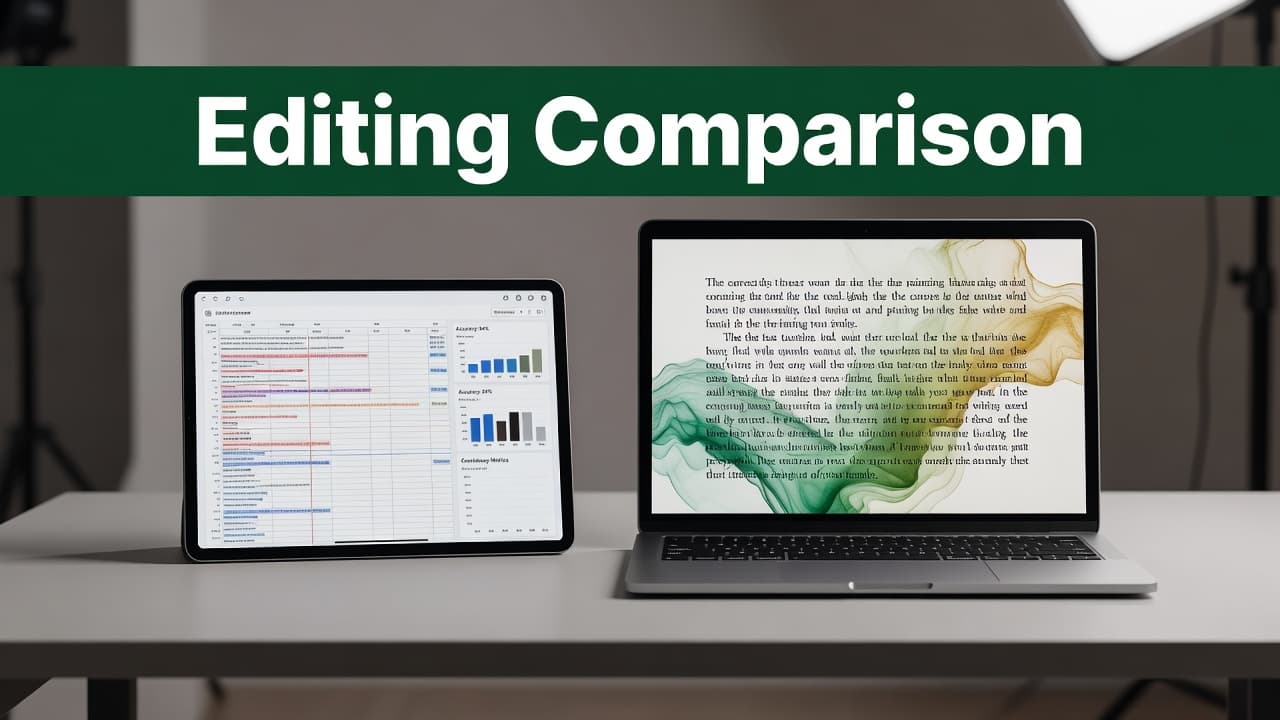
The distinction matters because a rewrite can also change meaning. In legal copy, academic work, technical documentation, and financial content, a small wording shift may alter a claim. A grammar correction is usually easier to trace than a wholesale rewrite.
Comparisons of AI writing tools and humanizers often group them together because both change text. However, their editorial roles are different.
Editorial need | AI humanizer | AI writing assistant |
|---|---|---|
Correct spelling and punctuation | Limited and inconsistent | Strong fit |
Remove repetitive AI phrasing | Stronger fit | May improve isolated lines |
Preserve an approved sentence exactly | Less reliable | Stronger fit |
Adjust tone for a business audience | Broad rewrite, requires review | Targeted suggestions and tone support |
Check facts or sources | Cannot do this | Cannot do this |
Prove human authorship | Cannot do this | Cannot do this |
The practical divide is simple. Grammarly edits the surface and readability of the text. A humanizer may rebuild the language of the draft, which requires much closer review than using a standard grammar checker.
For business writers and content teams, Grammarly often fits near the end of the writing process. It excels at polishing AI-generated text for tone and readability, catching mistakes that appear during revision such as duplicated words, comma errors, unclear antecedents, and inconsistent capitalization. Because those errors can distract readers even when the underlying argument is strong, using Grammarly as a reliable grammar checker remains a standard best practice.
Its tone features also help editors identify mismatches between a message and its audience. A client update should not sound like a casual group chat, and a university paper should not use sales copy. Still, tone labels are prompts for judgment rather than final verdicts. A direct email may register as blunt, while a vague email may appear polite but fail to answer the question.
Grammarly also functions as an effective plagiarism checker, providing an extra layer of security for professional teams. However, it is important to note that the tool lacks a custom voice profile compared to specialized writing platforms, which may limit its ability to replicate a unique brand identity perfectly.
Grammarly's own AI features belong to an editorial model focused on refinement. While it can rephrase text for better flow, Grammarly has stated that its features are not intended to work around AI detectors. That boundary matters. A tool designed for professional editing should not be treated as proof that a document is safe from a detector score or an institutional review.
Grammarly also has limits that become clear with AI-generated drafts. It may accept a polished sentence that contains a false statistic, or it may improve the grammar of a citation that does not support the claim beside it. It cannot tell whether a brand's product name has changed, whether a quote is complete, or whether a medical statement needs expert review.
Clean prose is not the same as accurate prose. A sentence can be flawless and still be wrong.
For that reason, Grammarly works best after the writer has thoroughly checked the facts, sources, and central argument.
A humanizer is most useful when a draft displays clear machine patterns. Common signs of robotic text include repeated transitions, paragraphs with identical lengths, generic topic sentences, and language that sounds polished but lacks depth. A broad rewrite can break these patterns faster than manual, line by line edits.
For marketers, this process may transform a flat product overview into more varied copy. For freelancers, it can help generate a less uniform first draft before the real editorial work begins. Bloggers often use these tools to cut formulaic introductions or reduce repetitive conclusions that clearly indicate the use of AI-generated text.
Yet, this rewriting power creates risks. Humanizers can accidentally remove key terminology that matters for search, change a careful qualification, or replace plain language with unfamiliar synonyms. They can also distort citations by moving a claim away from its source. In academic writing, this can weaken attribution, even when the original draft included valid references.
Claims that a service will make content completely undetectable deserve special caution. Writers often turn to these tools to bypass AI detectors like GPTZero or ZeroGPT, hoping to achieve undetectable AI writing by manipulating metrics like perplexity and burstiness. However, AI detection tools only estimate patterns; they do not reliably determine authorship. Because their algorithms are constantly updated, a passage that passes an AI detection bypass check today might receive a different score tomorrow. This is especially true when attempting to meet the strict originality detection standards set by platforms like Turnitin.
A personal review of more than 20 humanizer tools illustrates how widely results can vary, but personal testing is not independent validation. Vendor claims and online tests should never guide an academic submission or determine whether an employer policy has been met.
Using a humanizer to conceal prohibited AI use can also breach course rules, publication contracts, or workplace standards. The safer question is not whether you can successfully bypass AI detectors. It is whether the writer can stand behind every sentence and disclose AI assistance when policy requires it.
The strongest workflow for long-form content separates drafting, verification, rewriting, and proofreading. It does not place blind trust in any single tool.
First, the writer should read the AI draft without editing. This reveals gaps in logic, missing reporting, recycled phrases, and claims that need sources. At this stage, subject-matter expertise matters more than sentence polish. A health writer needs to check medical guidance, a finance writer needs to confirm current figures, and a student needs to confirm that each citation supports the argument.
Next, humanizing AI text may help reshape sections that sound mechanical. When using these tools, writers should evaluate the output against an AI likelihood score or an AI similarity score to gauge how the machine perceives the text. However, a quality tool should focus on more than just a high bypass rate; it must prioritize factual accuracy. The output should always be compared against the source draft, particularly when it includes figures, quotes, product specifications, legal language, or citations. Writers should restore required terminology and remove invented details to ensure the content remains reliable.
Then Grammarly can handle the final proofing pass. Its suggestions are useful for catching friction that remains after heavier edits, helping to achieve natural-sounding writing that is polished and professional. Every accepted change should still make sense in context.
This sequence also protects the writer's voice. A humanizer should not invent personality where none exists. To effectively bypass AI detectors, writers must add real judgment, relevant examples, and a point of view grounded in deep knowledge of the subject.
For teams evaluating tools, head-to-head humanizer comparisons can be a starting point, though a short internal test is more useful. Teams should test the same approved draft across tools, then check factual retention, terminology, readability, and the number of edits needed afterward to ensure the final piece meets their standards for quality and authenticity.
When deciding between an AI humanizer vs Grammarly, your choice should depend on the specific state of your draft. Grammarly is the superior first choice when your content already contains original reporting, accurate facts, and a strong point of view. It excels at polishing an article, proposal, email, or essay without rewriting every line, providing the editor with full visibility into individual changes.
An AI humanizer serves a narrower, more specific purpose. It is designed to help when AI-generated text feels repetitive or impersonal, aiming to inject a sense of human-like fluency into the prose. While a standard paraphrasing tool like QuillBot can improve sentence structure, specialized AI humanizers focus on creating detector-resistant output. However, even when using these tools to bypass automated checks, the result should never be the final step before publication.
Writers who value precision should always preserve their version history. Keeping the original draft, the rewritten version, and the final edited copy makes it much easier to spot altered claims. This is especially important for regulated sectors and academic work, where specific wording carries significant consequences.
Before uploading client material or unpublished research, you should also review tool pricing, word limits, privacy practices, and data retention terms. A free rewrite or a cheap subscription is not a good bargain if it exposes confidential information or creates an unclear ownership record for your content.
Yes, they are complementary tools that serve different purposes. You might use a humanizer to fix robotic phrasing early in your workflow and then use Grammarly as a final step to ensure the corrected text remains grammatically accurate and professional.
No, there is no guarantee. AI detectors constantly update their algorithms to identify patterns, meaning a passage that bypasses detection today may be flagged tomorrow, regardless of the tool used.
It can, which is why close review is necessary. Humanizers often swap vocabulary or rearrange sentence structures, which may unintentionally alter technical details, legal terminology, or the specific nuance of your claims.
The debate regarding AI humanizer vs Grammarly is not a competition with a single winner. Grammarly remains the most dependable choice for controlled, professional editing, while an AI humanizer provides the nuance needed to revise stiff, robotic phrasing at a deeper level.
Ultimately, humanizing AI text is a multifaceted task that requires a careful blend of automated tools and diligent human oversight to be successful and ethically sound. Neither of these technologies can replace original reporting, rigorous source verification, or the insight of an editor who understands the subject matter. Human judgment remains the only reliable check on whether a polished draft is accurate, useful, and accountable.